
It's Worse
"But what about-" It's worse.

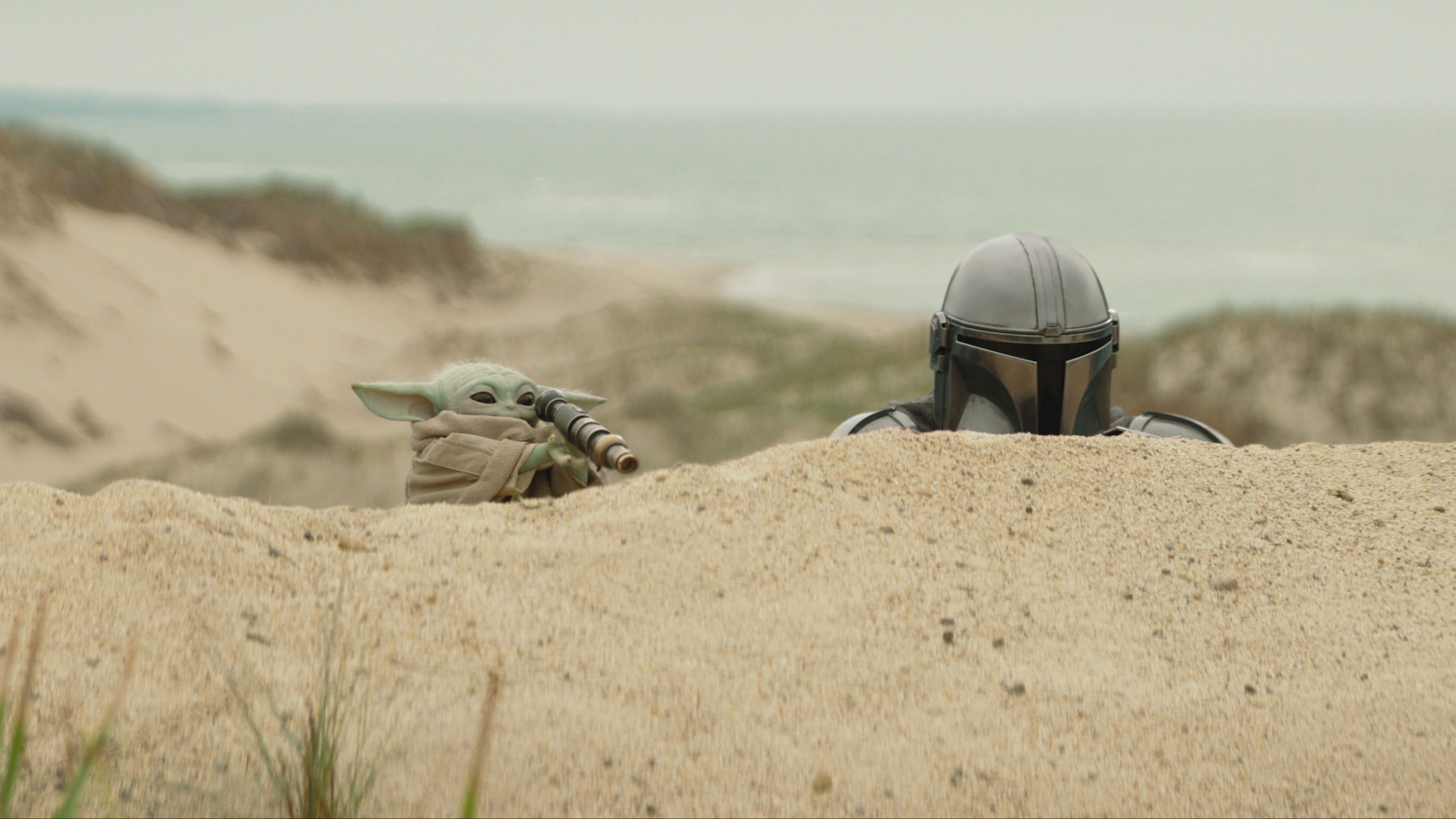
Looking back, it was over for Star Wars as a cultural fixture when they named that little thing Grogu.
There were, I admit, signs. While The Force Awakens is still the highest-grossing movie in the history of North America by nearly a full hundred-million dollars, it seemed more like a final breath than a rebirth, like the people of this country giving Star Wars one last dance before we put it behind us. Star Wars was, in one sense, a progenitor of American fan culture, but in another sense it was so culturally significant that it could not be said to be a “fandom” object. Everyone, once upon a time, to varying degrees, was a Star Wars fan. Everyone saw The Force Awakens in theaters. It wasn’t a film you needed an enthusiast’s attachment to get something out of. It was like a royal wedding—love it or hate it, you watched.
And then it was over. The following ten years have seen Star Wars slowly devolve from the preeminent American entertainment franchise to something for aficionados only. No one could have foreseen this in 2015. We all knew we were in for a deluge of Star Wars, of course, an avalanche of what was coming to be called “content.” Jokes abounded: They’re going to make a movie about gonk droids, there’s going to be a TV show about Dexter Jettster’s diner, we will all be listening to Yaddle (Original Broadway Cast Recording) on repeat. We thought we were in for oversaturation. Now it’s 2026, almost 11 years after The Force Awakens, and it’s been seven of those years without a Star Wars movie in theaters. The new one is a spinoff of a spinoff, an adaptation of a streaming television series about a guy who looks like but is not Boba Fett and an alien who looks like but is not a baby Yoda. These two “characters” (in that they are not real people) “have adventures” (in that they travel to multiple locations where they sometimes are present for action sequences) on a “television show” (the structure of which would have been unrecognizable to anyone in 2015). Now they are gracing the big screen. We are told this counts as Star Wars being back, because the title of the film is Star Wars: The Mandalorian and Grogu, and not merely The Mandalorian and Grogu, which could be about anything.
The streaming series The Mandalorian premiered mere months before The Rise of Skywalker released in theaters to a generally depressed response. Absolutely no one liked The Rise of Skywalker, a film precision designed by Swiss engineers, in the wake of the nuclear flame wars inspired by The Last Jedi, to appeal to everyone. But everyone did like The Mandalorian, which had an irresistible Lone Wolf and Cub hook and a slightly grungier feel than the bleached-clean feature film it released alongside. It also had Baby Yoda, whom Disney could not stop people from calling Baby Yoda no matter how many toys they sold with “The Child” on the box. Baby Yoda is not Baby Yoda, because Yoda is a different guy who died. But he is of the same species as Yoda, and everyone knows who Yoda is, and the concept was just so charming. Everyone knew Baby Yoda was cute. Some people started talking about how they hated Baby Yoda and wanted to punt him off of cliffs or crush him with steamrollers. This is how you know they also thought he was cute.
At the end of season 1, we learn that the Mandalorian’s real name is Din Djarin. You could hear the cracks crackling like mad. 5 episodes later, in the middle of season 2, we learn that Baby Yoda’s real name is Grogu. Grogu. This moment, precisely, to the minute, is when Star Wars passed from “cultural phenomenon” to “small-time nerds-only property.” I demand that you roll “Grogu” around on your tongue for a minute. Form those syllables with your lips. Say it slowly and watch in a mirror how your mouth moves. Now rinse. Grogu. Grogu. In one voice millions of Star Wars viewers said “I’m not going to call him that.” And Dave Filoni, who created The Mandalorian with Jon Favreau, and who now runs all of Star Wars, said, “You’re going to call him Grogu, or you’re going to Gro-get the fuck out of here.” And people chose the latter. Every episode of the first two seasons of The Mandalorian has its own Wikipedia page. No one bothered for season three. No one left loved it that much.
Years pass. Star Wars becomes exclusively oriented around streaming television shows. Most of them are used as opportunities for Dave Filoni, who cut his teeth on the well-regarded Clone Wars animated series in the 2000s, to bring his favorite OCs to big-budget live-action life. No one who thought Baby Yoda was cute knows who any of these people are. No one likes any of the new shows, except, unpredictably, for the one that shows the origin story of a secondary character in Disney’s mostly-forgotten first attempt at non-mainline Star Wars theatrical features. It’s called Andor and it’s good in ways that make no sense whatsoever. Andor’s run is cut off, forced to cram several seasons of plot into a single 12-episode run, which are dumped three at a time over the course of a month. Not counting an animated show for preschoolers, it is the last Star Wars Piece Of Content to come out for a year. So much for oversaturation.