
Frederick Wiseman: Forced Perspective
The greatest screen chronicler of human life has left us.

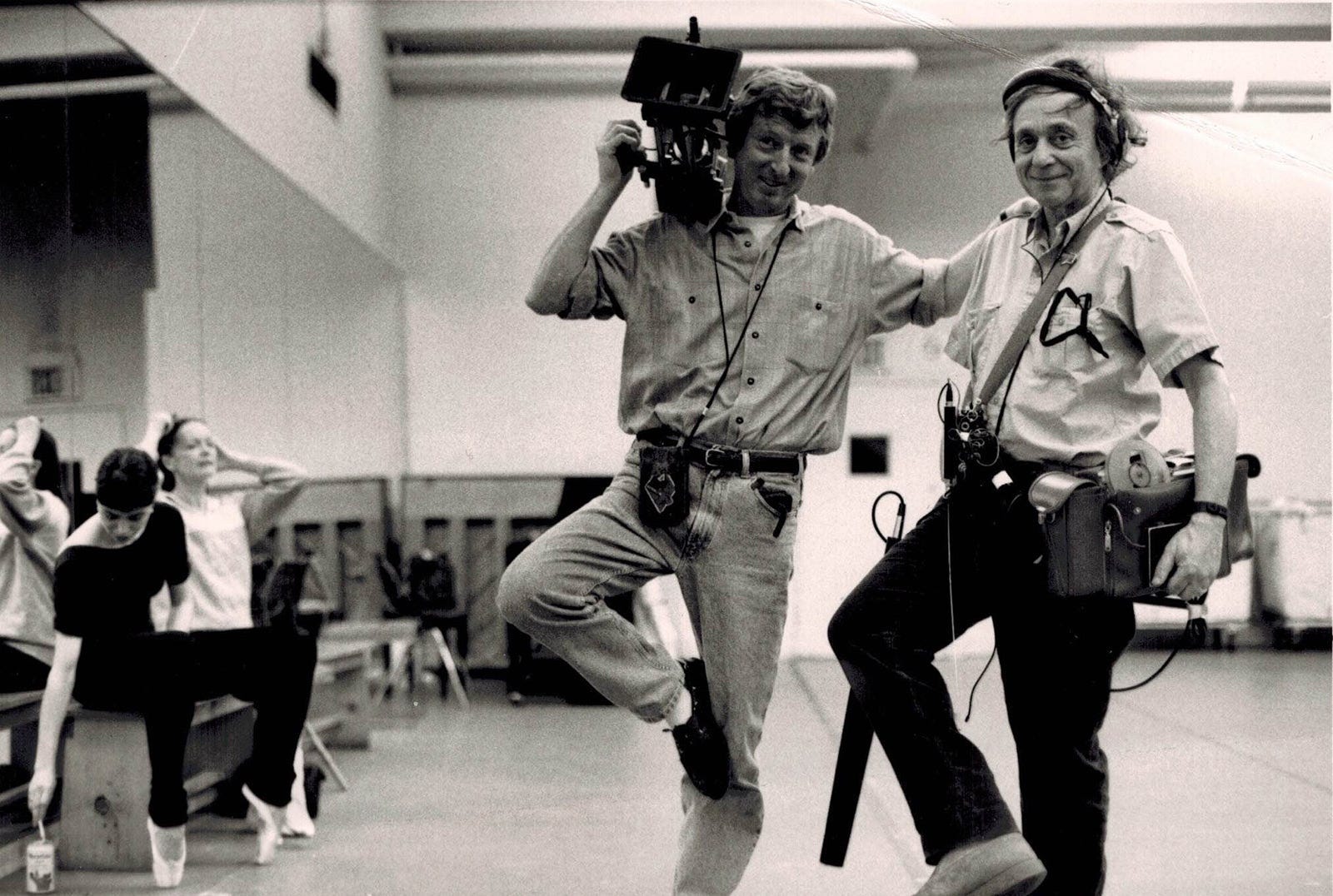
Frederick Wiseman wasn’t supposed to be a filmmaker.
Many of history’s most indelible artists started young, guided by the hand of fate to a destined outcome. At the age at which Orson Welles made Citizen Kane, Fred Wiseman had just graduated from Yale Law School with no more idea of a direction to take his life than he’d had when he entered. He was drafted, went through basic training, and took an assignment in an army court to avoid being sent on maneuver. He was tasked with repeating every word he heard in the courtroom into a microphone so they could be recorded for posterity. So as not to distract anyone in the room, he wore a gas mask which had been rigged with a microphone inside. He was like the group of outcasts at the end of Fahrenheit 451 who have devoted their memories to the task of recording and preserving history. One imagines him sitting in those courtrooms, his face obscured, whispering into his mask, learning to become invisible.
Wiseman first made a film at the age of 36, with the same spirit of inquisitiveness that would animate the next six decades of his life. His first film was Titicut Follies, shot in a mental hospital in his home state of Massachusetts. Wiseman didn’t intend to make a muckraking exposé, but as he would later put it, it was impossible to shoot there and not come away with a perspective. This is one of the core ideas of his ethos—that a theme can emerge naturally from observation, and that observation itself can never be truly neutral. Titicut Follies became the only film ever to be banned in the United States for a reason other than alleged obscenity. That’s the kind of thing that would spur anyone to make filmmaking their life’s work.
Wiseman disliked the term “documentary” as applied to his work. His films are often associated with “direct cinema,” non-fiction films which eschew narration and talking heads and other devices used to craft narratives out of raw footage. But while direct cinema often pursues an objective truth, a document of reality as it happened, Wiseman’s films deny even the possibility of objectivity. How can a film represent a pure reality when the camera can only be pointed one way, when a scene can be cut away from? Wiseman’s films are not simply representational; they constitute the accumulation of a cavalcade of artistic decisions. Wiseman could not help but make a point.
His second film, High School, was in some ways the first real “Wiseman Work.” Titicut Follies, with its hyper-specific focus on a single hospital and its grimly ironic title, feels like a dry run. High School takes place in a single school, but its title clues us in to Wiseman’s intention—this single high school will stand in for the broader concept of high school, it will teach us what “high school” means in America in the late 1960s. High School and his next few films, Law and Order and Hospital, look at three of the most basic and important institutions in American life (education, law enforcement, and healthcare) and ask the question which Wiseman would spend the next sixty years finding answers for: How does a society transmit its values through its institutions? A school’s “discipline officer” insists students submit to the authority of their teachers. Police officers demand submission even from those they’re ostensibly trying to help. Even benevolent doctors require submission from patients to their expertise. Perhaps Wiseman was thinking about his time in basic training when he began to see this dynamic all across American society. His next film was called Basic Training.
Wiseman had a few fixations into which his films can be roughly categorized. He made films about American governmental institutions (Juvenile Court, Welfare, State Legislature, City Hall), about communities (Canal Zone, Aspen, Belfast, Maine), about education (High School and its sequel, the Blind and Deaf quadrilogy, At Berkeley), about recreation (Central Park, Racetrack, Ex Libris), about the military (Basic Training, Sinai Field Mission, Manoeuvre), about art (Ballet, La Danse, La Comédie-Française), about animals (Zoo, Primate, Meat). Yet some of his most memorable films explored multiple angles: Public Housing is about a community as administered by the government, Missile is about military education, National Gallery is about art as an institution unto itself. What connects them all is curiosity—about the world, about people, about ways of living for oneself and others.
Wiseman’s subjects, simple and broad as they initially appear, are used like a magician’s forced perspective trick. The title of a Wiseman film compels the viewer to understand every scene through a particular context. Think about what the frequent shots of people picking up trash in Central Park say about the labor required to construct our concept of that space, or what the lack of similar shots in Aspen says about the myopia of that community. Wiseman does not operate didactically, making obvious ideological remarks or scoring points off his participants (though he was not in the habit of rescuing people who made fools of themselves, either). Instead, he shows people acting in both the wider context of a film and in micro-contexts created by editing. The little boy in Blind who navigates the corridors of his school sightlessly feels like a mythic hero. A man accused of domestic violence in Domestic Violence looks like a terrifying monster. An English teacher in Belfast, Maine seems to understand the fabric of the universe itself.
That English teacher embodies another Wisemanian structural trait: The scene that locks the entire movie into place. The teacher in Belfast explains to his students that Herman Melville’s great innovation was to grant a common man—a fisherman—the same tragic stature as the kings of Shakespeare, and in that moment you realize why Wiseman made the movie at all. Nearly all his films have a scene like this, and it would be a disservice to you to spoil any more of them. These scenes work because of Wiseman’s structure of accumulation; he gives us material which at first seems disordered but gradually, satisfyingly reveals its connective tissue.
Sometimes, Wiseman films are hypnotically repetitious. Meat, a film about commercial butchery, is practically a harsh noise music video, full of grinding and clanking and shrieking as machines process animal flesh. The factory sequences in Belfast, Maine achieve a similarly mesmerizing effect. Repetition is used for bleaker purposes, too. In Public Housing, we hear a wealthy interloper suggest several times that the residents of a housing project “start a company” where they “turn off all the light switches in their building.” It’s emblematic of the hopeless rhythms in which these people have been trapped, an impression only possible to make when working at Wiseman’s patient pace. He does the same thing in Welfare, where the ceaseless procession of unhelpful and outright hostile case workers begins to give the viewer the same outrage, and then the same exhaustion, as the people who are there for help.
Wiseman didn’t hold the camera when he made movies—that responsibility belonged to his longtime cinematographer and creative partner John Davey. Instead, Wiseman held the microphone during his productions, preferring (as when he wore that gas mask recorder in those courtrooms) to listen than to look. Sometimes, when you watch a Wiseman movie, you can catch the moments where he was leading Davey to a new subject. Suddenly, the voice of the person on screen will fade out and a new voice from out of frame will fade in, and the camera will whip around to find them. It’s another forced perspective trick, in a way. Wiseman trains your ears to beat your eyes.
Wiseman’s films could hardly be said to have main characters in a traditional sense1, but they are full of kooks and cranks and oddballs. In Ex Libris, a librarian tells someone over the phone that unicorns are in fact fictional creatures, and thus there are no books about their biology. In Central Park, then-mayor of New York Ed Koch sprints through a crowd of marathoners screaming “IT’S ME!” like a maniac, and Wiseman and Davey struggle to keep up with him. In Missile, we hear a few times about a depressed and unconfident cadet who isn’t doing well in class. Later on, we see an instructor give him tips on how to pass tests using tricks like “the third answer out of four is a good guess” and “the number that’s in the middle is more likely to be right.” His last film, Menus-Plaisirs — Les Troigros, features one of recent cinema’s great failsons, a total loser who perverts the artistry of his family’s work with chintzy gimmick menus. Wiseman films are funny, and not in that polite-NPR-chuckle way, like laugh-out-loud hilarious.
The most-used weapon in Wiseman’s arsenal is the meeting scene. He could make a bunch of people sitting around talking about their organization’s budget seem enthralling. The centerpiece of Deaf is a meeting between a parent and school administration that lasts for nearly an hour, and the viewer’s understanding of the people involved shifts dramatically numerous times throughout. His art films all contain meeting scenes that place a passion for art in tension with the capitalist forces whose approval is necessary to maintain it. A memorable scene in the still-unreleased The Garden shows a preacher administering religious advice to a group of bored-looking New York Knicks. There are some fantastic meetings of clubs and community organizations in In Jackson Heights; when I saw the film in a theater, a man sitting in front of me nodded and “mhm”’d along with some of these scenes, as though he was taking part in the meeting himself. That film contains one of Wiseman’s most enthralling meeting moments, where a woman describes in a lengthy monologue the odyssean story of how her young relative made it across the border. The human voice, alone or in conversation with others, was his favorite subject.
He depicted mundane human drama on epic scales without exaggeration or condescension. His films are not polemics, but they were hardly unbiased—Wiseman’s allegiance was always to humility in the face of arrogance, to humanity in the face of cruelty. No other filmmaker in history has more comprehensively captured what it means to be alive on this planet: To be rich and poor, to be happy and sad, to be captive and free. Wiseman’s heroes were those who selflessly stretched out hands to help, like the handyman in Public Housing or the teachers in Blind and Deaf or the owner in Boxing Gym. He celebrated people who brought beauty into the world, like the performers in Ballet and La Danse and Model, or the people who helped others understand that beauty, like the tour guides in National Gallery. He resented the teachers and administrators he found in High School, but celebrated the innovations in education he found in High School II. He really hated authoritarians wherever they appeared, and he showed us the way such impulses grow like weeds within our institutions.
Wiseman’s work teaches us new ways of seeing each other and thinking about ourselves, and his loss is compounded by all the things he did not get a chance to explore. Imagine Wiseman’s Public Transit, or Fast Food, or Hotel. Wiseman’s Airport or Amusement Park. The man worked for sixty years and made almost fifty films, and it still feels like he had so much more to explore. Our species is lesser for his absence.
His gift to us, his lasting legacy, is the ability to see our world the way he saw it, to shift our own perspectives and understand the people and institutions in our lives in the contexts which produced them (and which they produce). He taught us the magic trick of crossing our eyes and seeing the hidden picture. Frederick Wiseman wasn’t supposed to be a filmmaker, but sometimes a thing simply cannot help but be. The wind must blow, the waves must crash, the leaves must fall, and Fred Wiseman must make movies.
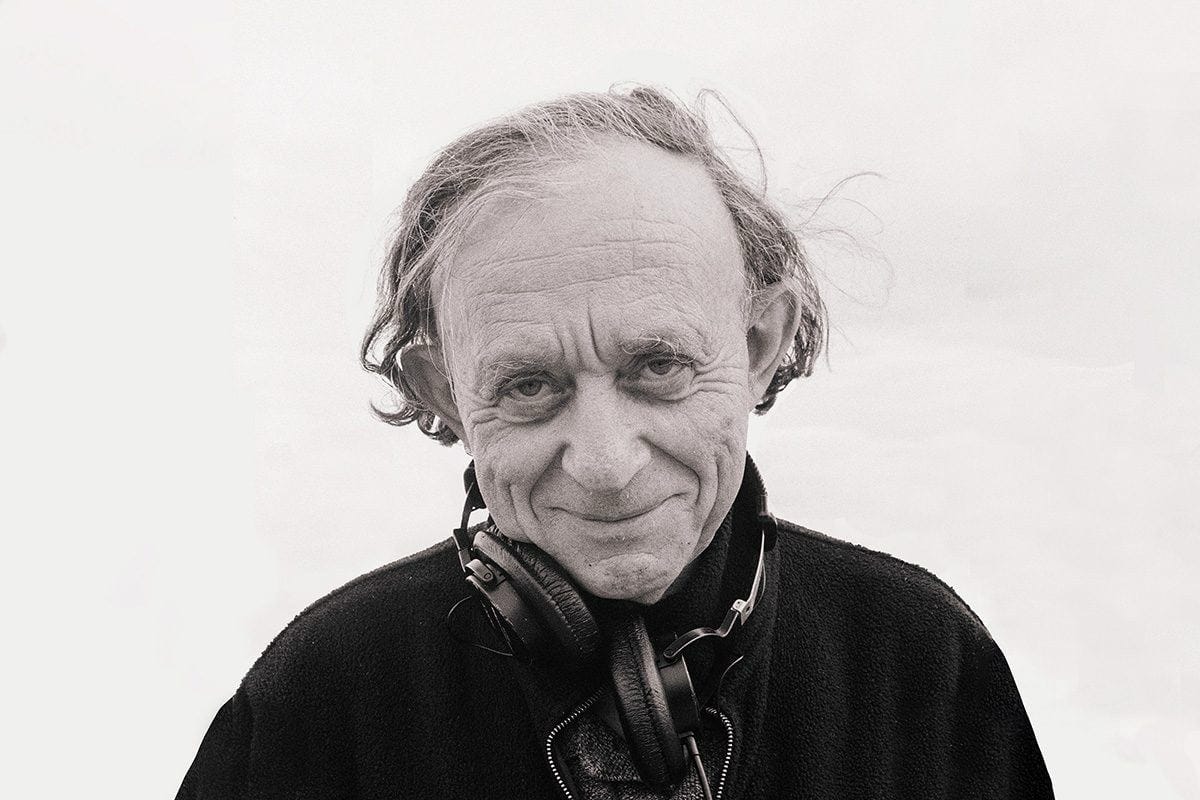
1930-2026
Notable exceptions: Boxing Gym, City Hall, Menus-Plaisirs, arguably some others, sound off in the comments!
Great piece! One could say the style is Wiseman-esque! Adding and adding pieces to make one big beautiful whole story.
Your posting about Wiseman is a big part of why I finally started watching his movies earlier this year! So, thank you for that. Excited to continue to dive into his robust and unique body of work.